Rose | 2026
A hoje canonizada Joana d’Arc foi condenada e sentenciada à morte sob mais de setenta acusações, sobretudo por heresia, bruxaria, por afirmar receber mensagens divinas e por usar roupas masculinas. Em 1456, vinte e cinco anos após sua morte, a mesma Igreja que a enviara à fogueira reconheceu que ela fora vítima de um julgamento manipulado e politizado, anulando sua condenação. Séculos mais tarde, em 1920, Joana seria enfim canonizada. A imagem da “Donzela de Orléans” que evocamos dificilmente deixa de ser a de Maria Falconetti em A Paixão de Joana d’Arc, de Carl Theodor Dreyer, filme que eternizou o martírio da heroína francesa por meio de uma das mais soberbas atuações já registradas no cinema (talvez a maior de todas).
Veja-se: Joana d’Arc foi presa, julgada, condenada e morta por usar roupas masculinas. Foi punida por sua afronta herege e por colocar-se em condição de igualdade com os homens. Embora tenha sido submetida a toda sorte de sofrimentos, manteve-se convicta até o fim – e o close-up extremo em Falconetti permanece como retrato máximo desse calvário. Nesse contexto, torna-se quase automático pensar em A Paixão de Joana d’Arc diante de Rose, de Markus Schleinzer, obra da competição da 76ª Berlinale que rendeu o Urso de Prata de melhor atuação a Sandra Hüller (que já havia sido premiada vinte anos antes, em 2006, por seu trabalho em Requiem).
Em Rose, um vilarejo protestante da Alemanha do século XVII recebe um soldado forasteiro que afirma ser o herdeiro de uma fazenda até então abandonada, apresentando um documento que supostamente comprovaria seu direito à propriedade. Recebido com desconfiança pelos moradores locais, ele passa a conquistar reconhecimento à medida que se mostra trabalhador e religioso, colaborando com a comunidade e gerando empregos. Casa-se com uma mulher do vilarejo e, assim, finalmente alcança credibilidade. No entanto, um acidente envolvendo o apiário acaba por revelar sua farsa: aquele homem é, na verdade, uma mulher.
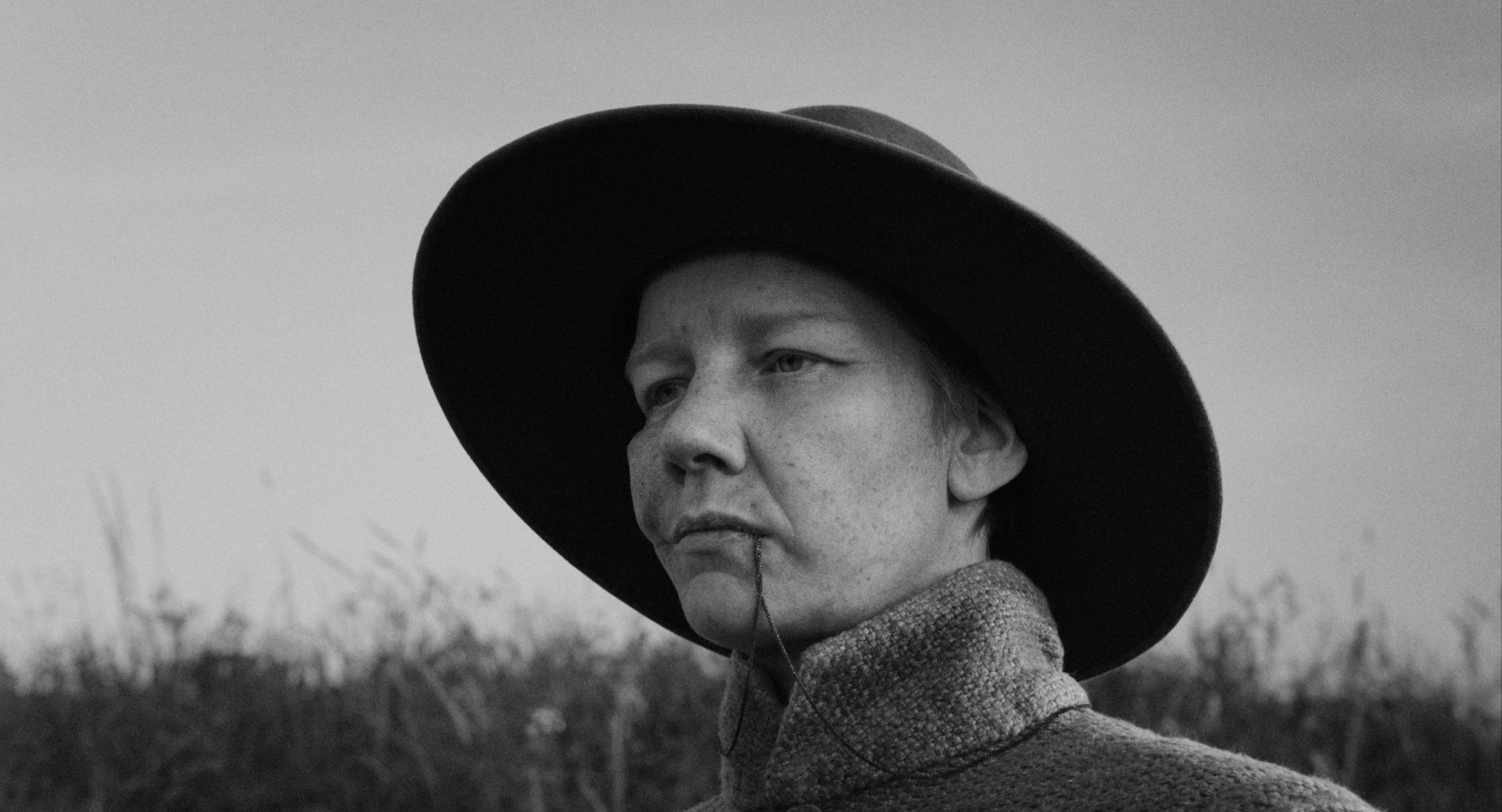
Rose é inspirado em fatos reais, e sua protagonista-título foi capaz de enganar um vilarejo inteiro ao viver como homem durante muitos anos. As vestimentas masculinas, a força para o trabalho, a desfiguração de seu rosto marcada por uma cicatriz e suas poucas palavras tornaram plausível o disfarce. Num tempo em que às mulheres restavam apenas os trabalhos domésticos e os casamentos arranjados (sequer podiam ser herdeiras e assim o foi por centenas de anos), Rose fez o que estava ao seu alcance para conquistar um lugar em um espaço que não lhe pertencia em razão de seu gênero. Farsante ou não, ela lutou contra um sistema patriarcal, opressor e violento à sua própria maneira, encontrando, tal qual Joana d’Arc, um destino quase inevitável naquele contexto.
Se a fotografia em preto e branco de Gerald Kerkletz aproxima e remete ao filme de Dreyer com ainda mais naturalidade, a atuação de Hüller assume um tom mais contido e resignado que o de Falconetti, afastando a obra de Schleinzer do clássico e mantendo-a em seu lugar de reverência (e claramente não seria de outra forma). O minimalismo não reside nos cenários, mas nas interpretações, mais frias, justamente porque o drama é extraído do próprio contexto fático e perturbador, e, inclusive, da narração de Marisa Growaldt, que é direta e confere um aspecto cru aos acontecimentos.
A contenção é, de fato, o mecanismo que provoca a angústia crescente transmitida por Rose. Sabemos que a descoberta da fraude acarretará consequências que não desejamos. O próprio casamento de Rose gera ansiedade, já que a figura da esposa, Suzanna (Caro Braun), é tão conservadora quanto o vilarejo, além tratar-se de uma mulher que anseia por ter filhos e que também foi enganada pelo suposto marido. Há algo de reconfortante e bonito quando a própria esposa passa a guardar seus segredos e ambas estabelecem uma espécie de pacto e parceria que lhes dá liberdade e as protege, como mulheres, da repressão masculina.
Além da representação do martírio, em Rose encontramos tanto o símbolo da afronta a um patriarcado secular, por meio dos expedientes que a protagonista utiliza para alcançar o direito à propriedade que era negado às mulheres, quanto uma reflexão de caráter queer da personagem, que assume em sua vida um novo sexo e permanece, sendo originalmente mulher, casada com outra mulher. Veja-se que, para o século XVII (e para muitos lugares ainda hoje), a ficha criminosa de Rose seria extensa. Não se trata, exatamente, da assunção de uma identidade trans por parte da protagonista, mas, ao adotar publicamente uma identidade masculina para trabalhar, herdar, lutar em guerras ou circular socialmente, há que se reconhecer uma representatividade queer bastante evidente.
A evocação da santidade de Rose e a consolidação de sua construção inspirada em Joana d’Arc se confirmam quando o destino das duas converge, mas também quando uma gravidez misteriosa torna o martírio ainda mais evidente. Seu crime é exposto e provado pelos próprios apetrechos que utilizava para sustentar o disfarce masculino.
A comunidade que a acolhera, e que também foi acolhida por ela com trabalho e oportunidades, transforma-se rapidamente em tribunal. Como em tantas histórias marcadas pela vigilância sobre os corpos femininos, o que está em julgamento, claramente, não é apenas a fraude, mas a transgressão do lugar que lhe fora interditado desde o nascimento. Como Joana d’Arc, a protagonista encontra seu destino no momento em que ousa ultrapassar os limites impostos ao seu gênero, quando ocupa um posto de poder que lhe é proibido. O verdadeiro escândalo nunca foi a farsa, mas sim, a liberdade que ela se permitiu imaginar e usufruir, ainda que temporariamente.
English Version:
The now canonized Joan of Arc was condemned and sentenced to death under more than seventy accusations, especially for heresy, witchcraft, for claiming to receive divine messages, and for wearing male clothing. In 1456, twenty-five years after her death, the same Church that had sent her to the stake recognized that she had been the victim of a manipulated and politicized trial, annulling her condemnation. Centuries later, in 1920, Joan would finally be canonized. The image of the “Maid of Orléans” that we evoke can hardly be separated from that of Maria Falconetti in The Passion of Joan of Arc, by Carl Theodor Dreyer, a film that immortalized the martyrdom of the French heroine through one of the most superb performances ever recorded in cinema (perhaps the greatest of all).
Consider this: Joan of Arc was arrested, tried, condemned, and killed for wearing male clothing. She was punished for her heretical affront and for placing herself on equal footing with men. Although she was subjected to all sorts of suffering, she remained steadfast in her convictions until the end—and the extreme close-up of Falconetti remains the ultimate portrait of that calvary. In this context, it becomes almost automatic to think of The Passion of Joan of Arc when faced with Rose, by Markus Schleinzer, a work in the competition of the 76th Berlinale that earned the Silver Bear for Best Performance for Sandra Hüller (who had already been awarded twenty years earlier, in 2006, for her work in Requiem).
In Rose, a Protestant village in seventeenth-century Germany receives a foreign soldier who claims to be the heir to a farm that had until then been abandoned, presenting a document that supposedly proves his right to the property. Received with suspicion by the local inhabitants, he begins to gain recognition as he proves himself hardworking and religious, collaborating with the community and generating jobs. He marries a woman from the village and thus finally achieves credibility. However, an accident involving the apiary ends up revealing his deception: that man is, in fact, a woman.
Rose is inspired by real events, and its title protagonist was capable of deceiving an entire village by living as a man for many years. The male clothing, the strength for labor, the disfigurement of her face marked by a scar, and her few words made the disguise plausible. At a time when women were left only with domestic work and arranged marriages (they could not even be heirs, and so it was for hundreds of years), Rose did what was within her reach to conquer a place in a space that did not belong to her because of her gender. Fraudulent or not, she fought against a patriarchal, oppressive, and violent system in her own way, finding, like Joan of Arc, an almost inevitable destiny within that context.
If the black-and-white cinematography of Gerald Kerkletz brings the film even closer to and evokes Dreyer’s work with even greater naturalness, Hüller’s performance assumes a more restrained and resigned tone than Falconetti’s, distancing Schleinzer’s work from the classic and keeping it in its place of reverence (and clearly it would not be otherwise). The minimalism does not reside in the settings, but in the performances, colder ones, precisely because the drama is extracted from the factual and disturbing context itself, and even from the narration of Marisa Growaldt, which is direct and gives a raw aspect to the events.
Restraint is, in fact, the mechanism that provokes the growing anguish conveyed by Rose. We know that the discovery of the fraud will bring consequences that we do not wish for. Rose’s very marriage generates anxiety, since the figure of the wife, Suzanna (Caro Braun), is as conservative as the village, besides being a woman who longs to have children and who was also deceived by the supposed husband. There is something comforting and beautiful when the wife herself begins to keep her secrets and both establish a kind of pact and partnership that gives them freedom and protects them, as women, from male repression.
Beyond the representation of martyrdom, in Rose we find both the symbol of the affront to a centuries-old patriarchy, through the means the protagonist uses to obtain the right to property that was denied to women, as well as a queer reflection of the character, who assumes in her life a new sex and remains, originally being a woman, married to another woman. It should be noted that, for the seventeenth century (and for many places even today), Rose’s criminal record would be extensive. It is not exactly the assumption of a trans identity on the part of the protagonist, but by publicly adopting a male identity in order to work, inherit, fight in wars, or circulate socially, one must recognize a quite evident queer representativeness.
The evocation of Rose’s sanctity and the consolidation of her construction inspired by Joan of Arc are confirmed when the destiny of the two converges, but also when a mysterious pregnancy makes the martyrdom even more evident. Her crime is exposed and proven by the very implements she used to sustain the male disguise.
The community that had welcomed her, and that had also been welcomed by her with work and opportunities, quickly transforms into a tribunal. As in so many stories marked by the surveillance over female bodies, what is on trial, clearly, is not only the fraud, but the transgression of the place that had been forbidden to her since birth. Like Joan of Arc, the protagonist finds her destiny at the moment when she dares to cross the limits imposed on her gender, when she occupies a position of power that is forbidden to her. The real scandal was never the deception, but rather the freedom that she allowed herself to imagine and enjoy, even if temporarily.