Silenced Nights | 2026
Cobertura do TIFF (Festival de Toronto 2026), por Carol Ballan
Título Original: Silenced Nights
Direção: Lawrence Fajardo
Roteiro: Troy Espiritu
Elenco principal: Nico Antonio, Lotlot de Leon, Ina Feleo, Tanya Gomez, Joel Saracho, Dylan Ray Talon, Simon Ibarra
Duração: 110 min (1h50min)
Países: Filipinas, França, Taiwan
Desde 2023, a internet brasileira passou a utilizar o termo Filiprimos para se referir aos moradores das Filipinas, país no Sudeste asiático. Essa piada veio a partir de uma grande semelhança política, religiosa e até cultural, apesar da distância física que nos separa. Quase todos esses elementos se fazem presentes em Silenced Nights, mistura entre drama e thriller sobre as operações policiais relacionadas aos usuários de drogas na capital filipina.
Começamos a história ouvindo o depoimento de Andoy (Nico Antonio), um rapaz que testemunhou um crime hediondo acontecendo em meio ao seu bairro. Sem ser notado, ele acaba sendo a única pessoa que sabe exatamente o que aconteceu. Assombrado com os acontecimentos, ele passa a tentar ajudar a desmantelar toda uma rede de crimes cometidos por policiais, algo que se aproxima da realidade brasileira. Em um momento em que São Paulo, por exemplo, está passando por todo um debate relacionado à dispersão da cracolândia, podemos estabelecer um paralelo bastante direto entre as situações.
Um ponto curioso é que, nos primeiros momentos do longa, é até difícil distinguir se ele é documental ou ficcional, o que dialoga bem com sua origem em fatos reais e também com a linguagem cinematográfica do realismo. Mesmo em momentos mais avançados da narrativa, quando isso já está claro, temos elementos que retornam a essa estética, como a cena na qual vemos uma entrevista sendo editada dentro do filme. Só que isso contrasta bastante com a trilha sonora melancólica e inspirada em filmes noir que vai acompanhar a trama. Muitas vezes, ficamos confusos porque imagem e som parecem nos trazer informações conflitantes, indicando uma dificuldade em decidir qual será o tom da obra: uma investigação jornalística aos moldes de thriller ou esse drama focado no realismo social?
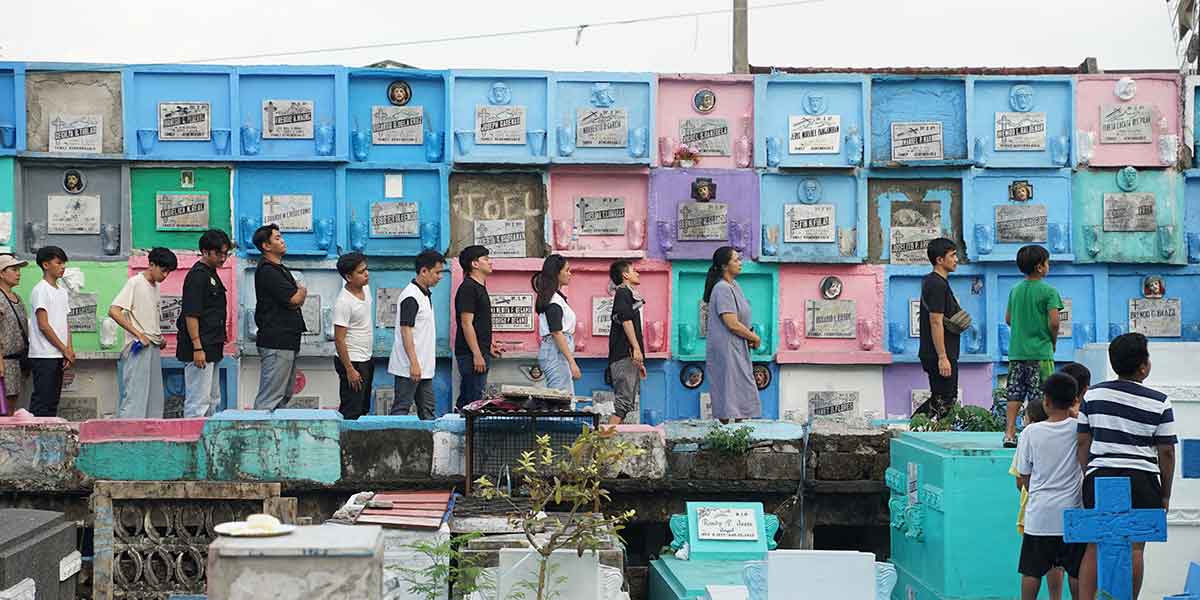
Algo também contrastante é o quanto algumas cenas parecem imensamente planejadas e executadas com ensaio e perfeição, enquanto outras parecem mais improvisadas e com menos preparo, seja por parte do elenco ou da equipe técnica. Há uma cena de procissão de diversos caixões pelas vielas da comunidade em que vive o personagem que parece ter sido pensada justamente para esse local de pouca possibilidade de movimento, combinada com um excesso de tristeza. Só que ela convive, no filme, com momentos nos quais temos o som estourado ou uma encenação exagerada em relação ao que é apresentado. Por passar por muitos altos e baixos, torna-se difícil encontrar qual seria o ponto médio da obra.
Além disso, como frequentemente acontece com filmes que tentam lidar com processos políticos e históricos muito complexos, a própria trama não consegue dar conta de tudo aquilo que tenta resolver. Se existe uma tentativa de explicar as diversas esferas de poder nas quais a corrupção se manifesta, infelizmente ainda saímos com a sensação de que não compreendemos exatamente a mensagem que ele tenta deixar além da trilha de destruição e violência. Talvez isso seja suficiente para parte do público, mas novamente, por lidarmos com questões semelhantes no Brasil, a obra parece demasiado simplista em sua visão. O filme busca encontrar entre essas esferas alguma que seja a real culpada pela guerra às drogas, mas ao mesmo tempo está muito mais preocupada com os indivíduos do que com as instituições. Esse foco individual nos dificulta compreender o cenário mais geral, e sem ele é quase impossível assimilar os reais mecanismos de opressão. Mostra-se a consequência de um processo, mas sem nunca abordar os motivos que o levam a existir em primeiro lugar.
Por mais que nos mostre algumas semelhanças e possa causar uma sensação específica no público brasileiro, ainda saímos pensando que a obra é quase inocente em seus propósitos, algo próximo ao que aconteceu com Tropa de Elite quando foi lançado. Ainda que haja uma forma cinematográfica preocupada em como contar a história, existe um pensamento inicial que parece contraintuitivo com esses objetivos.
English Version (tradução por Renata Torres)
Silenced Nights | 2026
Original Title: Silenced Nights
Director: Lawrence Fajardo
Screenplay: Troy Espiritu
Cast: Nico Antonio, Lotlot de Leon, Ina Feleo, Tanya Gomez, Joel Saracho, Dylan Ray Talon, Simon Ibarra
Runtime: 110 min (1h 50min)
Since 2023, the Brazilian internet has adopted the term Filiprimos (a portmanteau of “Filipino” and “cousins” in Brazilian Portuguese) to refer to the people of the Philippines, a Southeast Asian nation. This playful term arose from striking political, religious, and even cultural similarities, despite the vast physical distance separating the two countries. Almost all these elements are present in Silenced Nights, a blend of drama and thriller centering on police operations targeting drug users in the Philippine capital of Manila.
The story opens with the testimony of Andoy (Nico Antonio), a young man who witnessed a heinous crime in his neighborhood. Unnoticed by others, he becomes the only person who knows exactly what transpired. Haunted by the events, he attempts to help dismantle a criminal network involving police officers, a scenario that mirrors a plausible reality in Brazil. At a time when São Paulo, for instance, is engaged in a heated debate regarding the dispersal of Cracolândia (the city’s notorious open-air drug market), a direct parallel can be drawn between the two situations.
Interestingly, in the film’s opening moments, it is difficult to distinguish whether the work is a documentary or a fiction film; this ambiguity aligns well with its basis in real events and its cinematic style rooted in realism. Even as the narrative progresses and the distinction becomes clear, elements of this aesthetic persist, such as a scene showing an interview being edited within the film itself. Yet, this approach contrasts sharply with the melancholic, noir-inspired soundtrack that underscores the plot. We are often left confused because the visuals and sound seem to convey conflicting information, pointing to a struggle to settle on the work’s tone: is it a thriller-style journalistic investigation or a drama rooted in social realism?
Another point of contrast lies in how some scenes appear meticulously planned and executed with polished precision, while others seem more improvised and less prepared, whether on the part of the cast or the crew. There is a scene featuring a procession of multiple coffins through the narrow alleys of the protagonist’s community; it seems designed specifically for that setting, where limited mobility meets overwhelming grief. Yet, this coexists with moments of blown-out audio or acting that feels exaggerated relative to the scene presented. With such significant fluctuations in quality, it becomes difficult to pinpoint the film’s true center.
Furthermore, as often happens with films attempting to tackle highly complex political and historical processes, the plot itself fails to fully address everything it sets out to resolve. While there is an attempt to explain the various spheres of power where corruption manifests, we are unfortunately left feeling that we haven’t quite grasped the message beyond the trail of destruction and violence. This may suffice for some viewers, but given that we grapple with similar issues in Brazil the film’s perspective strikes me as overly simplistic. It seeks to identify which of these spheres bears the ultimate blame for the war on drugs, yet it remains far more concerned with individuals than with institutions. This focus on the individual makes it hard to grasp the broader picture, and without that context, it is nearly impossible to comprehend the actual mechanisms of oppression. The film depicts the consequences of a process without ever addressing the underlying reasons for its existence in the first place.
Even though it reveals certain similarities and may evoke a specific reaction among Brazilian audiences, we are still left feeling that the work is almost innocent in its intentions; somewhat akin to the reception of Elite Squad (Tropa de Elite, 2007) upon its release. While there is a cinematic approach clearly concerned with the storytelling, there is an underlying premise that seems at odds with those objectives.