Privadas de Suas Vidas | 2026
A prisão de ventre mais perigosa da história do cinema
O terror gore ainda ocupa um espaço relativamente tímido na produção brasileira, e Privadas de Suas Vidas, dirigido por Gustavo Vinagre e Gurcius Gewdner, mergulha justamente nas possibilidades mais escatológicas e absurdas do gênero. Misturando violência gráfica, humor, elementos sobrenaturais e crítica social, o longa parte de uma situação doméstica aparentemente banal para transformar o cotidiano dos moradores de um prédio em São Paulo em um pesadelo de proporções literalmente sanitárias e catastróficas.
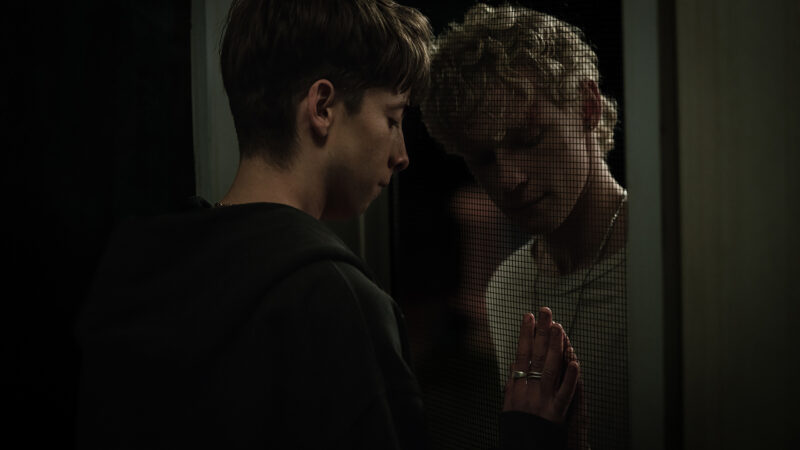
A história acompanha Malu (Martha Nowill), uma mãe solteira em luto que tenta reconstruir a vida após perder um de seus filhos gêmeos em um acidente trágico envolvendo uma privada. Praticamente sozinha, a produtora de eventos enfrenta dificuldades financeiras e uma relação cada vez mais conflituosa com Gênesis (Benjamin Damini), seu filhe adolescente não binárie. Incapaz de aceitar e compreender plenamente a identidade de gênero de Gênesis, Malu se vê encurralada entre o próprio luto, os choques geracionais e as demandas de uma família marcada por tensões que ela já não consegue administrar.
Pressionada pela situação econômica, Malu aceita organizar a festa de revelação de gênero de sua vizinha Suelen (Chandely Braz), uma influenciadora digital que só pensa em monetizar seu cotidiano através das redes sociais e vive uma vida de falsas aparências. Ela é mãe de um menino com deficiência física que sofre constantes e pesados assédios dos pais. A rejeição e os maus tratos fazem com que a criança se isole e crie uma conexão emocional com Gênesis, um encontro de seres humanos que enxergam nas dores familiares um forte ponto em comum e se apoiam.
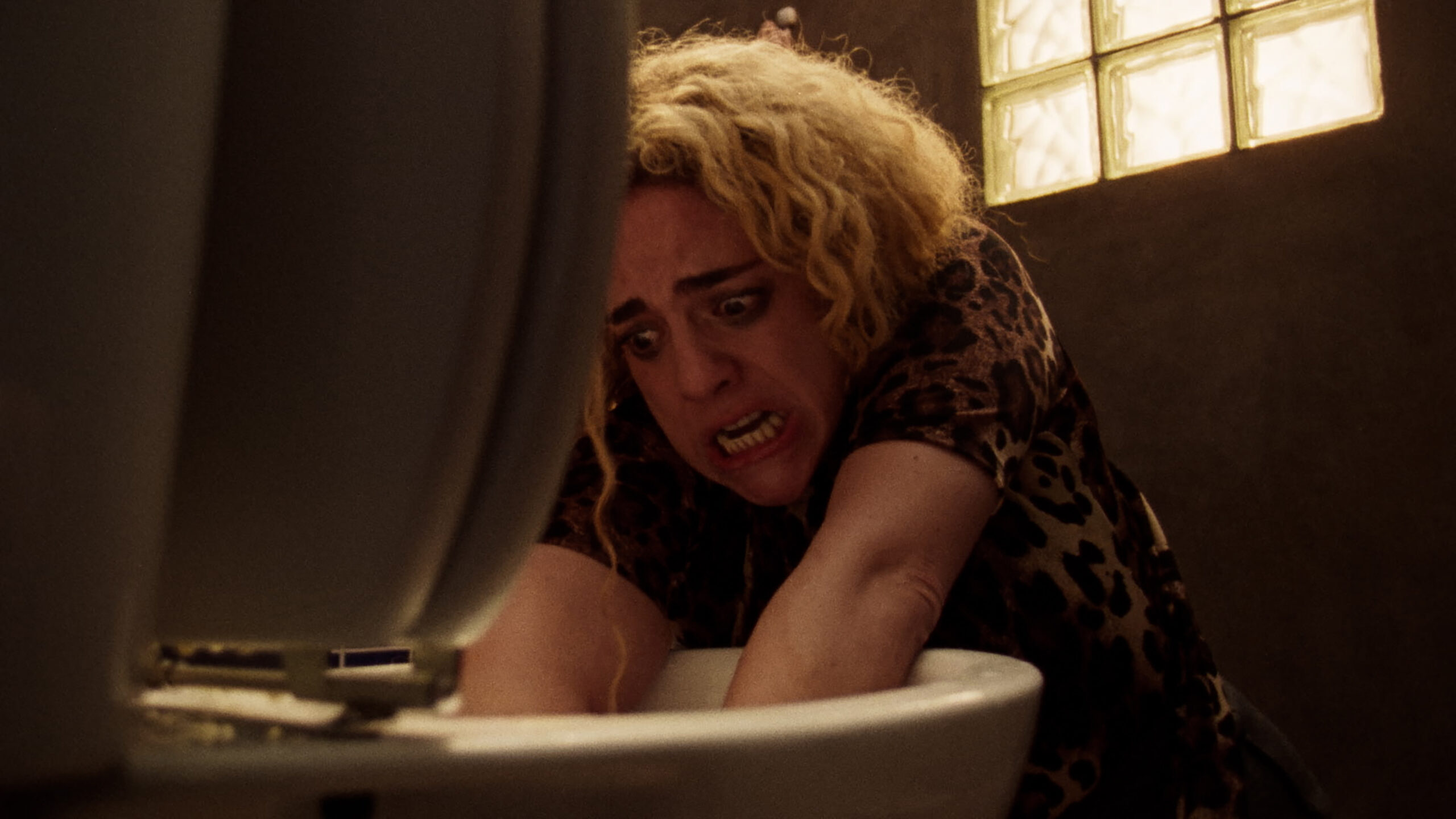
O evento do “chá de revelação” parece apenas uma oportunidade de conseguir algum dinheiro, mas acaba agravando as tensões entre mãe e filhe. No meio desse turbilhão, Malu luta para lidar com uma angustiante prisão de ventre, que vem afetando sua saúde e capacidade de agir racionalmente. O banheiro então passa a ser um território hostil, pois, além de um esforço descomunal para tentar se aliviar da constipação, a protagonista ainda enfrenta o peso das lembranças da privada que estraçalhou e matou seu filho. Toda essa dor desperta uma força sobrenatural que transforma os banheiros do prédio onde vive em armadilhas mortais.

O cotidiano familiar dá lugar a uma sucessão de acontecimentos bizarros vindos das profundezas dos encanamentos que irrigam todo o edifício, afetando também a vida dos demais moradores, que merecem o destaque atribuído a eles em cada minuto dedicado pela direção. Somos apresentados à excêntrica Katka (Olívia Torres), uma vidente estrangeira que lê borras de cocô e catarro (sim, é isso mesmo) e conecta o filme à breve e divertidíssima participação do diretor Bruce LaBruce; ao zelador (Otávio Müller) e as moradoras mais veteranas interpretadas por Maria Gladys (avó da atriz britânica Mia Goth) e Regina Braga. Esses personagens complementam a narrativa com suas micro peculiaridades, como uma enorme Vila do Chaves vertical.
É nessa premissa delirante que Vinagre e Gewdner encontram espaço para combinar o grotesco corporal à sátira dos códigos familiares e sociais. A ameaça sobrenatural funciona não apenas como fonte de horror, mas como uma extensão exagerada das tensões que já envolvem aquele universo. Conflitos de geração, dificuldades econômicas, relações familiares desgastadas e diferentes formas de preconceito são incorporados ao caos do gênero sem que o longa abandone seu prazer tragicômico. Ao mesmo tempo que o filme se mostra repugnante nas abordagens mais sangrentas e escatológicas, consegue ser extremamente carinhoso com o acolhimento às causas de gênero e inclusão.
Martha Nowill está no centro desse caos e segura todas as pontas do filme, a atriz abraça o exagero da personagem assumindo a posição de uma final girl e heroína improvável, enfrentando uma ameaça sobrenatural enquanto tenta sobreviver às próprias dificuldades cotidianas.
A fotografia e a construção de diversas cenas mostram indicações extremamente cinéfilas vindas dos diretores, como quando jorra uma cachoeira de água suja nos corredores e de repente nos transporta diretamente ao Overlook Hotel, de Kubrick. Esse e outros momentos icônicos compõem um mosaico de horror e comédia que Privadas de Suas Vidas constrói tão bem. O longa escalona do primeiro ao terceiro ato em situações cada vez mais perturbadoras e divertidas, para culminar em um final que ainda consegue acenar ao afeto.
O longa parece compreender que, no horror gore, o excesso também pode funcionar como ferramenta de crítica. Entre escatologia, acidentes absurdamente letais e referências ao cinema de gênero, Privadas de Suas Vidas transforma o banheiro em território de violência, trauma e caos, levando sua irreverência às últimas consequências. Produzido pela RT Features, o filme percorreu diversos festivais internacionais e foi premiado na 30ª edição do Fantasia International Film Festival.
A cerâmica, afinal, pode ser extremamente cortante. Nas mãos de Vinagre e Gewdner, até mesmo o mais banal dos ambientes domésticos pode se transformar em palco para uma combinação insólita, sanguinolenta e deliciosamente amaldiçoada de terror.
Essa crítica faz parte da cobertura do Festival Internacional de Cinema Fantasia 2026.
English Review:
The Most Dangerous Case of Constipation in Cinema History
Gore horror still occupies a relatively modest space within Brazilian filmmaking, and Bowels of Hell, directed by Gustavo Vinagre and Gurcius Gewdner, dives headfirst into the genre’s most scatological and absurd possibilities. Blending graphic violence, humor, supernatural elements, and social commentary, the film takes an apparently mundane domestic situation and turns the everyday lives of an apartment building’s residents in São Paulo into a nightmare of literally sanitary and catastrophic proportions.
The story follows Malu (Martha Nowill), a grieving single mother trying to rebuild her life after losing one of her twin children in a tragic accident involving a toilet. Largely on her own, the event producer struggles financially while her relationship with Gênesis (Benjamin Damini), her non-binary teenage child, becomes increasingly strained. Unable to fully understand or accept Gênesis’s gender identity, Malu finds herself caught between grief, generational conflict, and the demands of a family already buckling under unresolved tensions.
Under financial pressure, Malu agrees to organize a gender-reveal party for her neighbor Suelen (Chandely Braz), a social media influencer obsessed with monetizing her life online and maintaining an image of perfect appearances. Suelen is also the mother of a physically disabled boy who is subjected to relentless bullying by his parents. Rejected and mistreated, the child withdraws from the world and forms an emotional bond with Gênesis. Their connection emerges from a shared understanding of family pain, allowing the two to find support in one another.
What initially seems like little more than a chance for Malu to make some money only intensifies the tensions between mother and child. Meanwhile, she is struggling with severe constipation that begins to affect both her health and her ability to think clearly. The bathroom becomes a hostile territory, where her desperate attempts to relieve herself are haunted by memories of the toilet that brutally killed her son. Her trauma eventually awakens a supernatural force that turns the bathrooms throughout the building into deadly traps.
The familiar routines of family life soon give way to a series of bizarre events emerging from the depths of the building’s plumbing, affecting the other residents as well. The ensemble deserves the attention the filmmakers give them, with each character contributing their own eccentricities to this increasingly chaotic world. There is the peculiar Katka (Olívia Torres), a foreign clairvoyant who reads coffee grounds, feces, and mucus (yes, really), connecting the film to a brief and hilarious appearance by director Bruce LaBruce; the building’s caretaker (Otávio Müller); and its veteran female residents, played by Maria Gladys and Regina Braga. Together, they turn the apartment building into something resembling a vertical version of El Chavo del Ocho, where every resident seems to have their own strange little universe.
It is within this delirious premise that Vinagre and Gewdner find room to combine body horror with satire of family and social conventions. The supernatural threat functions not merely as a source of horror, but as an exaggerated extension of the tensions already present in this world. Generational conflicts, financial struggles, fractured family relationships, and different forms of prejudice are absorbed into the film’s escalating chaos without sacrificing its tragicomic spirit. As repulsive as the film can be in its bloodiest and most scatological moments, it is equally tender in its embrace of gender identity and inclusion.
Martha Nowill stands at the center of this madness and holds the entire film together. The actress fully embraces the character’s heightened sensibility, gradually transforming Malu into an unlikely final girl and heroine. She must confront a supernatural threat while simultaneously trying to survive the much more mundane disasters of her own life.
The cinematography and staging also reveal the directors’ deep cinephilia. At one point, a torrent of filthy water floods the corridors, instantly evoking the Overlook Hotel from Kubrick’s The Shining. Moments like this, alongside numerous other genre references, form a playful mosaic of horror and comedy. Bowels of Hell steadily escalates from its first act to its climax, turning increasingly disturbing situations into increasingly outrageous ones before arriving at a finale that still manages to leave room for affection.
The film understands that, within gore horror, excess can also become a tool for social commentary. Through scatology, grotesquely lethal accidents, and affectionate nods to genre cinema, Bowels of Hell transforms the bathroom into a territory of violence and chaos, pushing its irreverence to the limit. Produced by RT Features, the film has screened at several international festivals and received an award at the 30th edition of Fantasia. After all, porcelain can be surprisingly sharp, and in the hands of Vinagre and Gewdner, even the most ordinary room can become the stage for an unlikely, cursed combination of horror, absurdity, and affection.
This review is part of our coverage of the 2026 Fantasia International Film Festival.