
Moscas | 2026
Existem filmes que, muito embora se fundamentem em convencionalidades narrativas e previsibilidades, cativam porque encontram, em sua construção, um meio criativo capaz de destacá-los a ponto de tais elementos não se tornarem, de fato, algo negativo. Há uma razão bastante evidente quando se afirma que a forma como se conta uma história pode se sobrepor à própria história, pois é justamente esse modo de narrar que faz bons filmes. Moscas, de Fernando Eimbcke, que passou pela Competição da 76ª Berlinale, é um desses casos em que o desenrolar inicial já oferece pistas sobre o rumo que será tomado – e isso, na verdade, não constitui problema algum.
Olga (Teresita Sánchez) é uma mulher metódica e aparentemente austera. Dona de um apartamento localizado em um complexo residencial defronte a um hospital, somos apresentados a ela justamente a partir do elemento que dá título ao filme: é uma mosca que a desperta, perturbando a paz que ela zela meticulosamente por preservar. Nessa introdução, Eimbcke nos comunica a presença do inseto indesejado primeiro pelo som, antes mesmo que ele seja localizado. Vestindo um pijama com estampa de peixes, Olga passa a persegui-lo com um chinelo; abre a janela, mas a cortina emperra. Recorre então ao inseticida e, depois de uma sucessão de pequenos acontecimentos capazes de tirar qualquer pessoa do sério, compreendemos que ela encharcou a criatura com o produto pela textura sonora que remete ao animal molhado, bem como pelo próprio sufocamento que sente diante da quantidade exagerada utilizada. A mosca, o sexo no apartamento ao lado, os vizinhos, a televisão: tudo aquilo que ela escuta se revela um incômodo, e seu desassossego torna-se evidente nos primeiríssimos planos empregados pelo diretor.
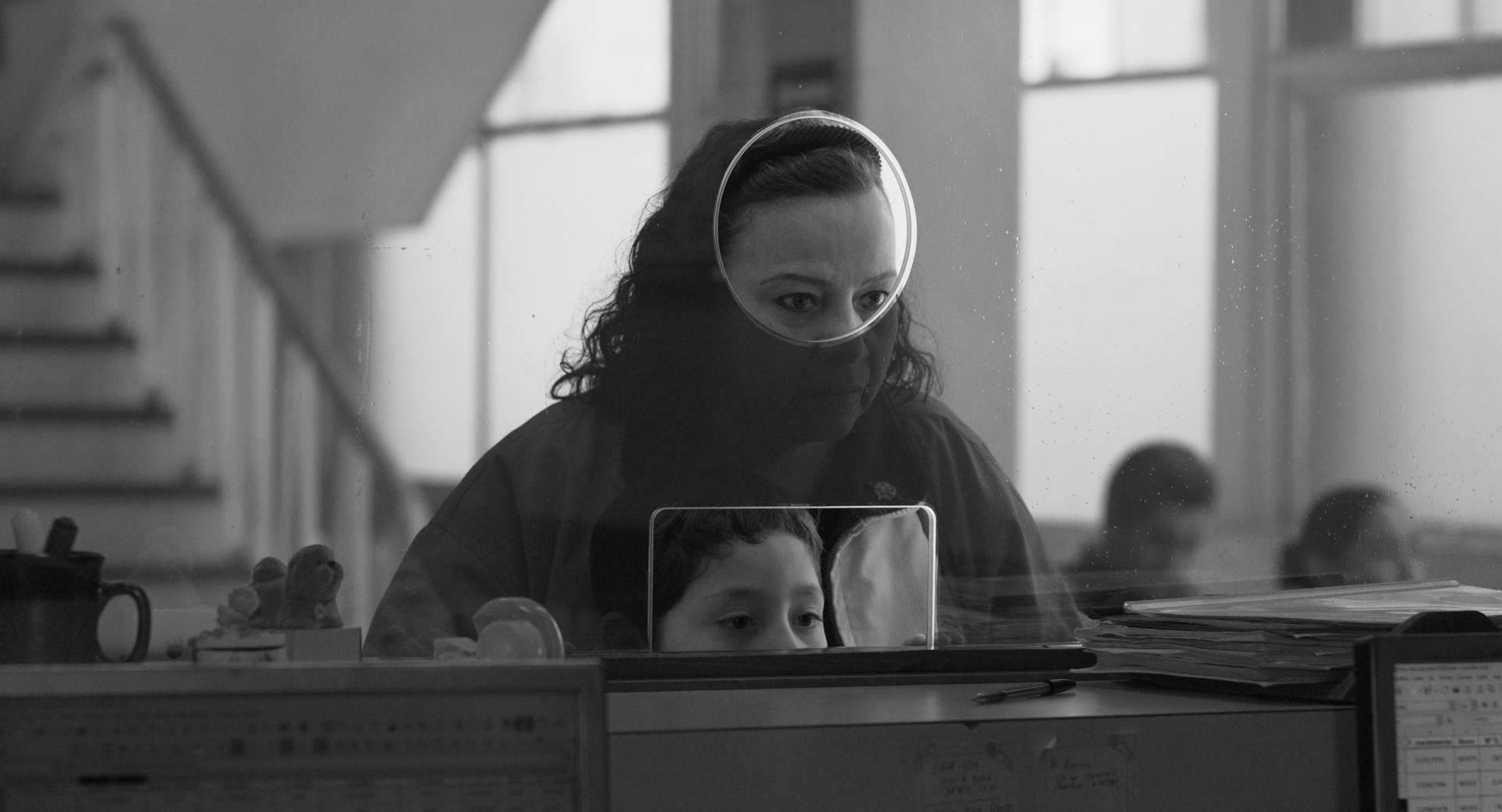
Em tempos de vacas magras, Olga decide alugar um dos quartos de sua residência, valendo-se da proximidade com o hospital para atrair parentes de pacientes internados. Quem se interessa pela oferta é Túlio (Hugo Ramírez), exatamente nessa condição, em razão da hospitalização de sua esposa. Em sendo o aluguel destinado a apenas uma pessoa, o hóspede, que é um pai e marido desesperado numa situação familiar de dificuldade e precarização, passa a trazer clandestinamente o filho, Cristian (Bastián Escobar), durante a noite, escondendo o menino dos olhos de sua anfitriã.
Com a chegada da criança, torna-se possível vislumbrar a alta probabilidade de que o coração endurecido daquela mulher inflexível venha a se abrandar. Se, a princípio, ela deixa claro que não deseja, de forma alguma, saber qualquer coisa sobre o paciente ligado a Túlio, é possível antever que acabará se conectando com Cristian de modo a romper seus próprios protocolos e limites.
O que torna Moscas um exemplar interessante dentro de seu gênero e de sua temática são as doses de humor que Eimbcke equilibra, além de certa perspicácia de seus personagens em meio a um contexto marcadamente dramático – que poderia, com facilidade, enveredar pela apelação emocional como caminho de desenvolvimento, algo de que o diretor habilmente se esquiva. Os elos que aproximam os personagens e promovem suas transformações parecem fundar-se mais na solidariedade e no abandono do que propriamente na construção de um vínculo afetivo.
Nota-se que há, na realidade urbana de Moscas, uma crise social e financeira que orienta a narrativa e os acontecimentos que dela decorrem. A precariedade econômica conecta Olga a Túlio e, numa sagacidade plenamente compreensível, também a Cristian. Em razão da doença da mãe e da necessidade de o pai trabalhar para sustentar a família, Cristian, que tem apenas nove anos, passa os dias sozinho pelas ruas, alimentando-se mal, sentindo fome e recorrendo a uma astúcia ao mesmo tempo inocente e infantil para conseguir algumas fichas de seu jogo preferido, Cosmic Defender Pro, e tentar, com seu jeito adorável e persuasivo, entrar às escondidas no hospital para ver a mãe.
Em que pese a vulnerabilidade envolvida, trata-se de uma circunstância em que apontar culpados, soluções ou emitir julgamentos se revela humanamente complicado. É justamente essa compreensão que Olga, cuja rigidez não a torna particularmente aprazível, passa a adquirir, sem que Moscas precise tornar-se verborrágico para evidenciá-la. Há, ainda, o elo do abandono. Olga e Cristian são figuras solitárias, ao menos naquele momento e naquela conjuntura, e ela assume, de forma quase natural, um dever de cuidado em relação à criança cujo pai se tornou ausente.
O humor, que advém das pequenas e perspicazes situações, abre as vias pelas quais Moscas encontra sua dimensão simbólica. Ao adotar o ponto de vista infantil e posicionar a câmera à altura da criança, Fernando Eimbcke insere formas e fugas pueris de lidar com os problemas da vida, que acabam, no fim das contas, ensinando aos adultos outras maneiras de enfrentá-los. O jogo é o maior conforto do menino, cujo entendimento ainda não é pleno em razão da idade, mas que intui, instintivamente, que algo muito grave acontece ao seu redor.
É justamente na evasão que Moscas mais emociona. A busca por uma fuga simplória como o Cosmic Defender Pro, o conforto e a satisfação encontrados ao comer um biscoito, o olhar pela janela e enxergar o hospital como se fosse um grande videogame são estratégias que Eimbcke utiliza para nos emprestar o olhar infantil e, assim, reencontrar encanto no que é simples. As moscas, afinal, retornam — e não deixam de ser também os próprios hóspedes. No entanto, já não incomodam mais.
English Review:
There are films that, although grounded in narrative conventions and predictability, captivate because they find, within their construction, a creative means capable of distinguishing them to the point that such elements do not actually become something negative. There is a fairly evident reason why it is often said that the way a story is told can surpass the story itself, since it is precisely this mode of narration that makes good films. Moscas, by Fernando Eimbcke, which screened in the Competition at the 76th Berlin International Film Festival, is one of those cases in which the initial unfolding already offers clues about the direction the story will take — and this, in fact, does not constitute a problem at all.
Olga (Teresita Sánchez) is a methodical and seemingly austere woman. The owner of an apartment located in a residential complex facing a hospital, we are introduced to her precisely through the element that gives the film its title: a fly wakes her, disturbing the peace she meticulously strives to preserve. In this introduction, Eimbcke communicates the presence of the unwanted insect first through sound, even before it is located. Wearing fish-patterned pajamas, Olga begins to chase it with a slipper; she opens the window, but the curtain jams. She then resorts to insecticide and, after a succession of small incidents capable of driving anyone mad, we understand that she has soaked the creature with the product through the sound texture that suggests a drenched animal, as well as through the suffocation she herself feels in the face of the excessive amount used. The fly, the sex in the apartment next door, the neighbors, the television: everything she hears proves to be an annoyance, and her restlessness becomes evident in the extreme close-ups employed by the director.
In lean times, Olga decides to rent out one of the rooms in her home, taking advantage of the proximity to the hospital to attract relatives of hospitalized patients. The one who shows interest in the offer is Túlio (Hugo Ramírez), precisely in this condition, due to the hospitalization of his wife. As the rental is intended for only one person, the guest — a desperate father and husband in a situation of family hardship and precarity — begins to secretly bring his son, Cristian (Bastián Escobar), during the night, hiding the boy from the eyes of his hostess.
With the arrival of the child, it becomes possible to glimpse the strong likelihood that the hardened heart of that inflexible woman will soften. If, at first, she makes it clear that she does not wish, under any circumstances, to know anything about the patient connected to Túlio, it is possible to foresee that she will eventually connect with Cristian in a way that breaks her own protocols and limits.
What makes Moscas an interesting example within its genre and theme are the doses of humor that Eimbcke balances, as well as a certain perceptiveness in his characters amid a markedly dramatic context — one that could easily veer toward emotional manipulation as a path of development, something the director skillfully avoids. The ties that bring the characters closer and promote their transformations seem to be founded more on solidarity and abandonment than on the construction of an affectionate bond.
It becomes evident that, within the urban reality of Moscas, there is a social and financial crisis that guides the narrative and the events that stem from it. Economic precarity connects Olga to Túlio and, in a fully understandable cleverness, also to Cristian. Because of his mother’s illness and the need for his father to work in order to support the family, Cristian, who is only nine years old, spends his days alone on the streets, eating poorly, feeling hungry, and resorting to an ingenuity that is at once innocent and childlike in order to obtain a few tokens for his favorite game, Cosmic Defender Pro, and to try, with his adorable and persuasive manner, to sneak into the hospital to see his mother.
Despite the vulnerability involved, it is a circumstance in which pointing to culprits, solutions, or passing judgments proves to be humanly complicated. It is precisely this understanding that Olga — whose rigidity does not make her particularly pleasant — begins to acquire, without Moscas needing to become verbose in order to demonstrate it. There is also the bond of abandonment. Olga and Cristian are solitary figures, at least at that moment and in that particular circumstance, and she assumes, almost naturally, a duty of care toward the child whose father has become absent.
The humor, which arises from small and perceptive situations, opens the paths through which Moscas finds its symbolic dimension. By adopting the child’s point of view and positioning the camera at the height of the child, Fernando Eimbcke introduces childish forms and escapes for dealing with life’s problems, which ultimately end up teaching adults other ways of confronting them. The game is the boy’s greatest comfort; his understanding is not yet complete due to his age, but he instinctively senses that something very serious is happening around him.
It is precisely in escapism that Moscas is most moving. The search for a simple escape such as Cosmic Defender Pro, the comfort and satisfaction found in eating a cookie, looking through the window and seeing the hospital as if it were a giant video game — these are strategies Eimbcke uses to lend us the child’s gaze and thus rediscover enchantment in what is simple. After all, the flies return — and they are also, in a sense, the very guests themselves. Yet they no longer disturb.