Imaginal Disk | 2026
Uma viagem alucinante transcendendo som em imagens
O encontro entre cinema e música costuma gerar obras particularmente fascinantes quando a imagem não se limita a ilustrar canções, mas encontra maneiras de expandir seus significados. Foi assim com The Wall (1982), que transformou o clássico álbum do Pink Floyd em uma experiência cinematográfica própria, marcada por simbolismos, animações e imagens que amplificaram a potência emocional da obra original. Em Imaginal Disk, a diretora Amanda Kramer segue um caminho semelhante ao adaptar para as telas o celebrado álbum lançado em 2024 pela dupla indie pop americana Magdalena Bay. Mais do que uma simples tradução visual das músicas, o filme busca transformar a atmosfera, os sentimentos e os conceitos do disco em uma narrativa de ficção científica romântica, psicodélica e profundamente sensorial.
Mais do que adaptar canções para a tela, o longa procura traduzir em imagens os sentimentos, conceitos e estados de espírito presentes no álbum. A narrativa acompanha True (Mica Tenenbaum), personagem que embarca em uma jornada de autodescoberta em busca de sua versão mais pura e autêntica. O percurso assume contornos de uma fábula existencial, conduzindo a protagonista por espaços que parecem obedecer à lógica dos sonhos, onde identidade, memória e percepção se confundem constantemente.
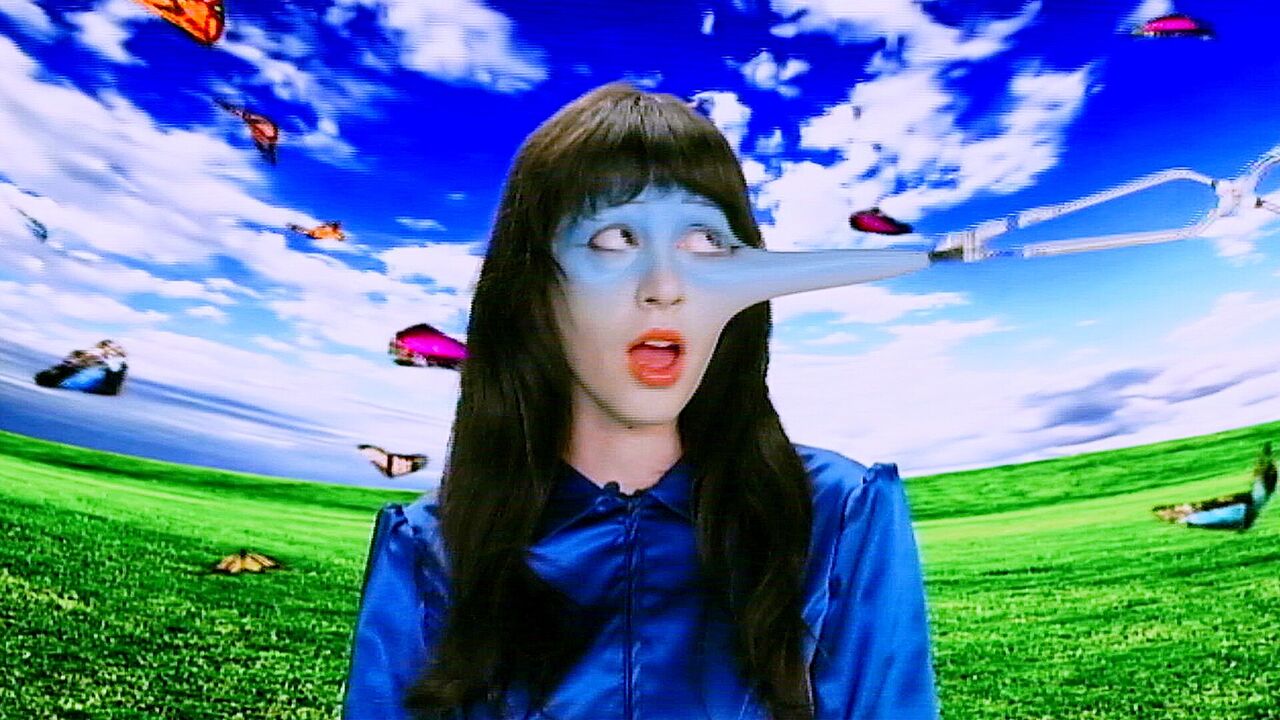
Kramer, conhecida por obras como Ladyworld (2018) e Please Baby Please (2022), demonstra novamente seu interesse por universos artificiais e altamente estilizados. Em Imaginal Disk, essa inclinação encontra terreno fértil. O filme mergulha em uma estética lúdica e psicodélica que parece saída diretamente da imaginação digital contemporânea. Cores vibrantes, cenários surreais, figurinos extravagantes e imagens que desafiam qualquer compromisso com o realismo criam uma experiência sensorial que se aproxima mais de uma viagem emocional do que de uma narrativa convencional.
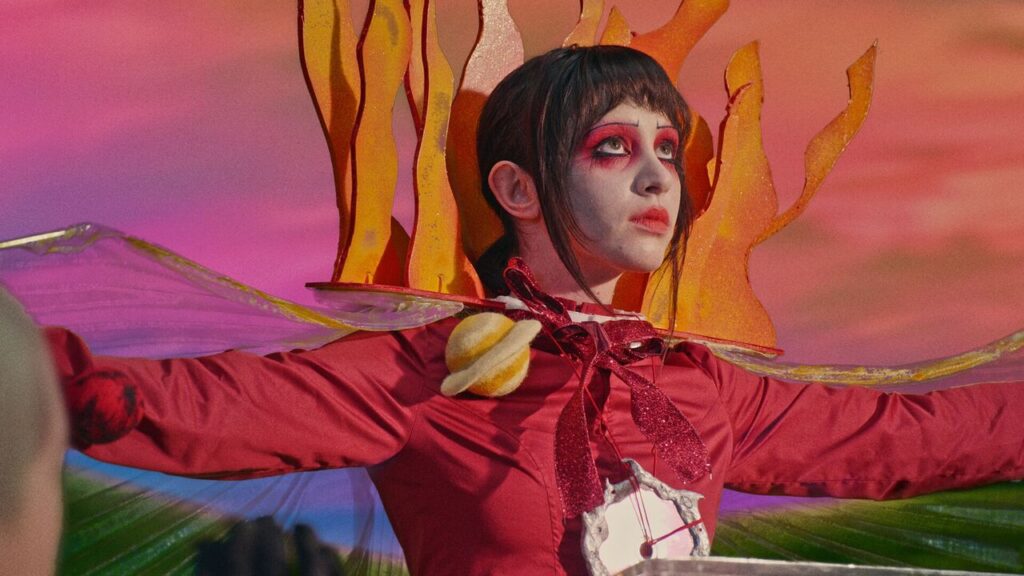
A estrutura do filme acompanha a própria natureza conceitual do álbum. As músicas não aparecem apenas como trilha sonora, mas como elementos que moldam o espaço, a narrativa e a construção simbólica das cenas. Há uma tentativa constante de converter texturas sonoras em linguagem visual, criando uma obra que se movimenta entre o cinema experimental, o musical e a fantasia de ficção científica. Assistimos ao longa como se estivéssemos ouvindo o álbum faixa-a-faixa, mas de um modo que nos transporta para o divertido universo conceitual da obra, com atuações caricatas e performances rodeadas de fantasia e estética surreal.
Essa liberdade de linguagem permite que Imaginal Disk explore uma iconografia fortemente associada à cultura pop contemporânea, misturando referências retrô-futuristas, imagens digitais e elementos que remetem tanto à psicodelia dos anos 1970 quanto à estética hipercolorida da internet. O filme parece existir em um espaço suspenso entre o analógico e o virtual, entre o humano e o artificial, reforçando as reflexões do álbum sobre identidade e transformação.
Com roteiro assinado pelos próprios integrantes da Magdalena Bay, o longa preserva a essência criativa do projeto musical ao mesmo tempo em que encontra uma linguagem própria para o cinema. Sua estreia mundial no Festival de Tribeca de 2026 consolida uma tendência cada vez mais presente na cultura contemporânea: a de álbuns que deixam de ser apenas experiências sonoras para se transformarem em universos narrativos completos.
Mais do que um complemento visual para os fãs da banda, Imaginal Disk se apresenta como uma experiência audiovisual imersiva, capaz de traduzir para a tela a natureza caleidoscópica e encantadoramente estranha do álbum que lhe deu origem.
Imaginal Disk fez parte da seleção oficial do Festival de Tribeca 2026
- English Review:
A Hallucinatory Journey Transcending Sound into Images
The intersection of cinema and music often produces particularly fascinating works when the image does more than merely illustrate songs, finding instead ways to expand their meanings. This was the case with The Wall (1982), which transformed Pink Floyd’s classic album into a cinematic experience of its own, marked by symbolism, animation, and imagery that amplified the emotional power of the original work. In Imaginal Disk, director Amanda Kramer follows a similar path by adapting to the screen the acclaimed 2024 album by American indie-pop duo Magdalena Bay. Rather than serving as a straightforward visual translation of the music, the film seeks to transform the album’s atmosphere, emotions, and concepts into a romantic, psychedelic, and deeply sensory science-fiction narrative.
More than adapting songs for the screen, the feature aims to translate into images the feelings, ideas, and states of mind embedded within the album. The story follows True (Mica Tenenbaum), a character who embarks on a journey of self-discovery in search of her purest and most authentic self. Her path takes the shape of an existential fable, guiding the protagonist through spaces that seem governed by dream logic, where identity, memory, and perception are constantly blurred.
Kramer, known for works such as Ladyworld (2018) and Please Baby Please (2022), once again demonstrates her fascination with artificial and highly stylized worlds. In Imaginal Disk, this inclination finds particularly fertile ground. The film immerses itself in a playful, psychedelic aesthetic that feels as though it has emerged directly from the contemporary digital imagination. Vibrant colors, surreal sets, extravagant costumes, and imagery that rejects any commitment to realism create a sensory experience that feels more like an emotional voyage than a conventional narrative.
The film’s structure mirrors the conceptual nature of the album itself. The songs do not merely function as a soundtrack; they become elements that shape the space, narrative, and symbolic construction of each scene. There is a constant effort to convert sonic textures into visual language, creating a work that moves fluidly between experimental cinema, musical storytelling, and science-fiction fantasy. Watching the film feels akin to listening to the album track by track, yet in a way that transports the audience into its playful conceptual universe, filled with exaggerated performances, fantasy-infused characters, and surreal aesthetics.
This freedom of form allows Imaginal Disk to explore an iconography strongly associated with contemporary pop culture, blending retro-futurist references, digital imagery, and elements that evoke both 1970s psychedelia and the hyper-saturated aesthetics of the internet age. The film seems to exist in a suspended space between the analog and the virtual, the human and the artificial, reinforcing the album’s reflections on identity and transformation.
Written by the members of Magdalena Bay themselves, the feature preserves the creative essence of the musical project while simultaneously developing a cinematic language of its own. Its world premiere at the Tribeca Festival 2026 reinforces an increasingly prominent trend in contemporary culture: albums that evolve beyond purely sonic experiences to become fully realized narrative universes.
More than a visual companion piece for fans of the band, Imaginal Disk emerges as an immersive audiovisual experience, capable of translating to the screen the kaleidoscopic and delightfully strange nature of the album that inspired it.
Imaginal Disk was part of the Official Selection of the Tribeca Festival 2026.