Mineshaft: The Cruising Murders | 2026
O choque entre realidade e representação
O cinema frequentemente encontra inspiração em acontecimentos reais, mas poucas vezes essa relação produz efeitos tão complexos quanto os que cercam Parceiros da Noite (Cruising, 1980), de William Friedkin. Quase meio século depois do lançamento do controverso thriller estrelado por Al Pacino, o documentário Mineshaft: The Cruising Murders, dirigido por Jeffrey Schwarz, retorna a esse episódio para investigar não apenas os crimes que inspiraram o filme, mas também a intensa reação que ele provocou dentro da comunidade LGBTQIA+ norte-americana.
Antes mesmo de chegar aos cinemas, Cruising já era alvo de protestos. Ambientado nos bares leather e nos espaços de encontro sexual frequentados por homens gays em Nova York, o filme acompanha um policial infiltrado encarregado de investigar uma série de assassinatos. Para construir sua narrativa, Friedkin utilizou como uma de suas referências o assassinato real do jornalista Addison Verrill, da revista Variety, misturando fatos e ficção em uma trama marcada por violência, paranoia e sexo.
O problema é que Cruising surgiu em um dos momentos mais delicados da história recente da população LGBTQIA+. Harvey Milk havia sido assassinado pouco tempo antes, figuras conservadoras como a da cantora Anita Bryant (declaradamente anti-gay) ampliavam sua influência política nos Estados Unidos e a representação homossexual no cinema ainda era extremamente limitada. Para muitos ativistas, ver uma das raras produções de grande estúdio centradas em personagens gays associar seus espaços de sociabilidade a assassinatos, perversão e perigo, significava reforçar exatamente os estigmas que tentavam combater.
Essa insatisfação não surgiu do nada. O documentário estabelece uma conexão interessante com Os Rapazes da Banda (1970), também dirigido por Friedkin. Embora hoje seja reconhecido como uma obra pioneira por colocar personagens homossexuais no centro da narrativa, o filme recebeu duras críticas em seu lançamento. Muitos espectadores viam seus protagonistas representados como figuras excessivamente neuróticas e caricatas. Dez anos depois, Cruising voltaria a colocar Friedkin, um homem cis heterossexual, no centro de uma discussão semelhante, reacendendo questionamentos sobre a forma como o diretor retratava a experiência gay em seus filmes.
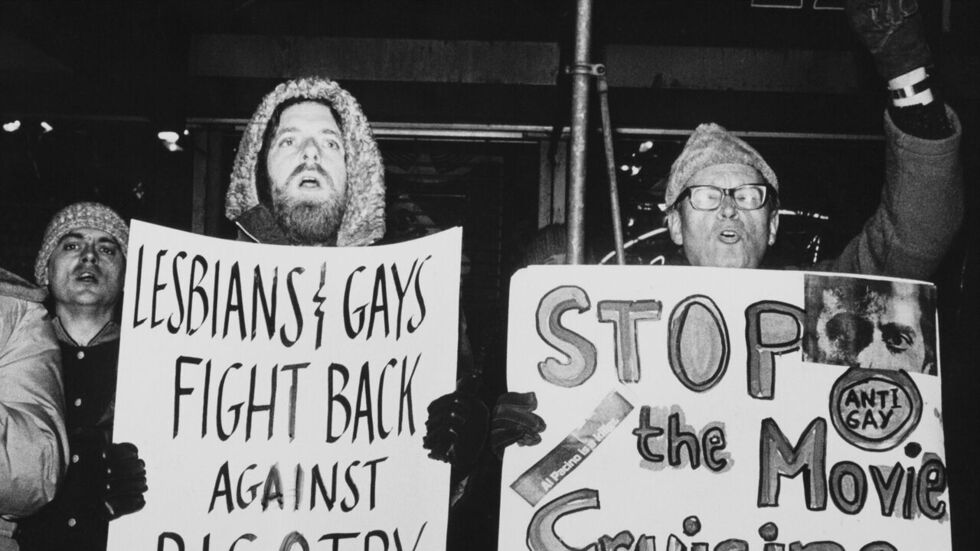
Schwarz contextualiza esse descontentamento ao recuperar imagens dos protestos organizados durante as filmagens de Cruising. Moradores e ativistas utilizavam apitos, buzinas e megafones para dificultar a captação de som nas ruas de Nova York, transformando a produção em um verdadeiro campo de disputa política. Mais do que um filme, Cruising tornou-se símbolo de um debate maior sobre representação, pertencimento e o direito de uma comunidade definir a própria imagem na cultura popular.
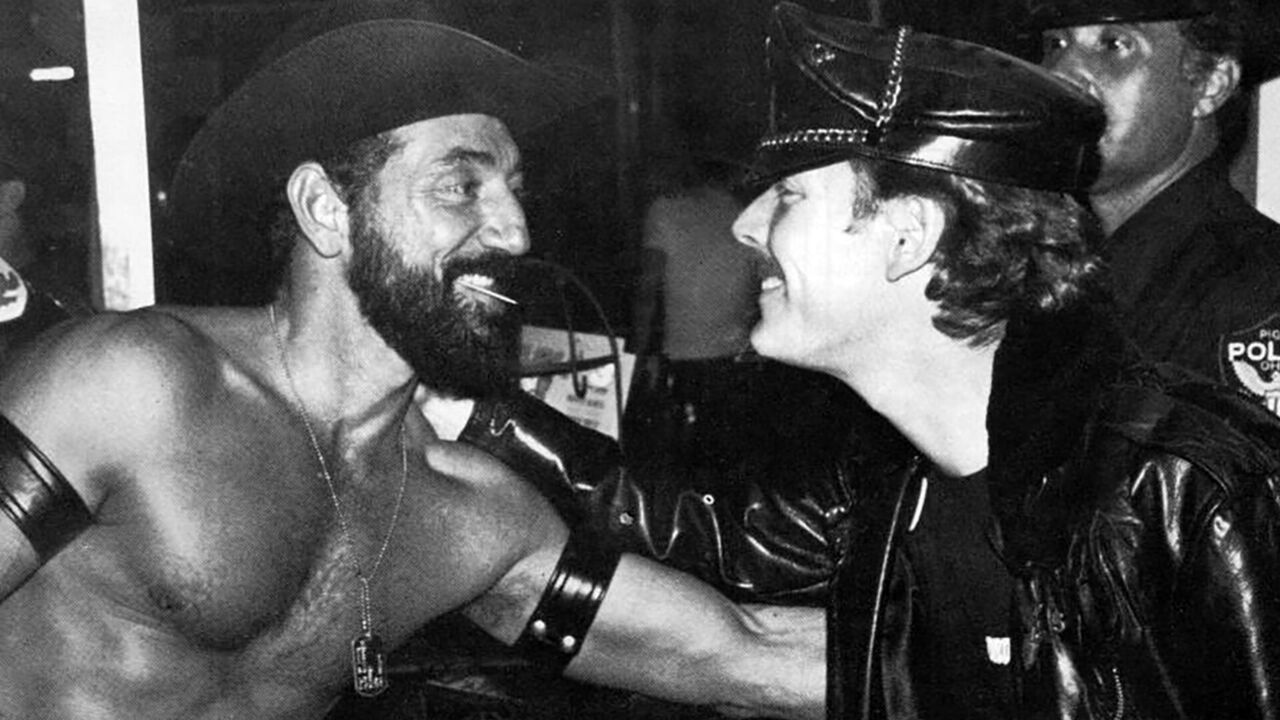
O documentário dedica atenção especial à cultura leather, frequentemente reduzida a estereótipos ou retratada apenas por sua dimensão fetichista. Surgida a partir de subculturas masculinas do pós-guerra, ela encontrou nos bairros centrais de Nova York um importante espaço de afirmação sexual e comunitária. Locais como o lendário Mineshaft, referenciado no título do filme, funcionavam não apenas como ambientes de encontros eróticos, mas também como pontos de convivência e construção identitária para homens gays que permaneciam marginalizados pelo restante da sociedade. Por meio de fotografias, relatos e registros da época, o filme revela uma comunidade rica, diversa e vibrante, distante da imagem exclusivamente sombria perpetuada por parte da imprensa e pelo imaginário popular.
Entre os aspectos mais curiosos explorados por Schwarz está a origem da própria obsessão de Friedkin por esse universo de crime e sexualidade. O documentário recupera a história de Paul Bateson, radiologista norte-americano condenado por assassinato e apontado como uma das inspirações para Cruising. Antes de se tornar conhecido pelos crimes que chocaram Nova York nos anos 1970, Bateson havia participado de O Exorcista (1973), interpretando um técnico em radiologia durante os exames realizados na jovem Regan. Friedkin o conheceu durante as filmagens e, anos mais tarde, ao descobrir sua ligação com um homicídio e as suspeitas envolvendo outros assassinatos de homens gays, passou a se interessar por aquele universo obscuro que serviria de base para o longa. A conexão parece improvável, mas ajuda a demonstrar como a fronteira entre realidade e ficção se mostrou particularmente nebulosa na gênese de Cruising.
Há ainda uma camada melancólica que permeia todo o documentário. Ao revisitar os bares leather e a vida noturna nova-iorquina do final dos anos 1970, Schwarz registra um mundo prestes a desaparecer. Poucos anos depois das filmagens de Cruising, a epidemia de AIDS transformaria radicalmente aquela cultura, encerrando espaços, alterando hábitos e deixando marcas profundas em toda uma geração. Nesse sentido, tanto o filme de Friedkin quanto Mineshaft: The Cruising Murders funcionam como registros históricos de um momento específico da experiência gay urbana, preservando a memória de uma comunidade cuja história seria profundamente modificada pelos acontecimentos da década seguinte.
Mais do que um documentário sobre um filme controverso, Mineshaft investiga o choque entre representação e realidade, revelando como uma obra de ficção foi capaz de desencadear debates que permanecem atuais. Ao mesmo tempo em que revisita crimes reais e polêmicas cinematográficas, o longa resgata fragmentos de uma cultura que existiu às margens e que encontrou, na noite nova-iorquina, formas de resistência, identidade e pertencimento.
- English review:
The Collision Between Reality and Representation
Cinema often finds inspiration in real-life events, but few cases have produced consequences as complex as those surrounding Cruising (1980), directed by William Friedkin. Nearly half a century after the release of the controversial thriller starring Al Pacino, Jeffrey Schwarz’s documentary Mineshaft: The Cruising Murders revisits this episode to investigate not only the crimes that inspired the film, but also the intense backlash it provoked within the American LGBTQIA+ community.
Even before it reached theaters, Cruising was the target of protests. Set in New York’s leather bars and sexual meeting spaces frequented by gay men, the film follows an undercover police officer assigned to investigate a series of murders. To construct its narrative, Friedkin drew in part from the real-life murder of Variety journalist Addison Verrill, blending fact and fiction in a story marked by violence, paranoia, and sex.
The problem was that Cruising emerged during one of the most delicate periods in recent LGBTQIA+ history. Harvey Milk had been assassinated only a short time earlier, conservative figures such as the openly anti-gay singer Anita Bryant were expanding their political influence in the United States, and homosexual representation in cinema remained extremely limited. For many activists, seeing one of the few major studio productions centered on gay characters associate their social spaces with murder, perversion, and danger amounted to reinforcing precisely the stigmas they were struggling to overcome.
This dissatisfaction did not emerge in a vacuum. The documentary draws an intriguing connection to The Boys in the Band (1970), also directed by Friedkin. Although the film is now recognized as a pioneering work for placing gay characters at the center of its narrative, it faced harsh criticism upon release. Many viewers felt its protagonists were portrayed as excessively neurotic and caricatured. A decade later, Cruising would once again place Friedkin, a heterosexual cisgender man, at the center of a similar debate, reigniting questions about how he depicted gay experiences in his films.
Schwarz contextualizes this discontent by recovering footage of the protests organized during the production of Cruising. Residents and activists used whistles, horns, and megaphones to disrupt sound recording on the streets of New York, turning the shoot into a genuine battleground of political contestation. More than just a film, Cruising became a symbol of a larger debate about representation, belonging, and a community’s right to define its own image within popular culture.
The documentary pays particular attention to leather culture, often reduced to stereotypes or portrayed solely through its fetishistic dimension. Emerging from postwar male subcultures, it found in central New York neighborhoods an important space for sexual and communal affirmation. Venues such as the legendary Mineshaft, referenced in the film’s title, functioned not only as places for erotic encounters but also as sites of socialization and identity-building for gay men who remained marginalized by broader society. Through photographs, personal testimonies, and archival materials, the film reveals a rich, diverse, and vibrant community, far removed from the exclusively dark image perpetuated by parts of the media and popular imagination.
Among the documentary’s most fascinating explorations is the origin of Friedkin’s obsession with this intersection of crime and sexuality. Schwarz revisits the story of Paul Bateson, the American radiologist convicted of murder and frequently cited as one of the inspirations for Cruising. Before becoming known for the crimes that shocked New York in the 1970s, Bateson had appeared in The Exorcist (1973), portraying a radiology technician during the medical examinations performed on young Regan. Friedkin met him during production, and years later, after learning of his connection to a homicide and the suspicions surrounding other murders of gay men, became increasingly interested in the dark world that would ultimately provide the basis for Cruising. The connection seems improbable, yet it illustrates how blurred the boundary between reality and fiction became in the film’s genesis.
A melancholic layer permeates the entire documentary. By revisiting the leather bars and New York nightlife of the late 1970s, Schwarz captures a world on the verge of disappearance. Only a few years after the filming of Cruising, the AIDS epidemic would radically transform that culture, closing venues, altering social practices, and leaving profound scars on an entire generation. In this sense, both Friedkin’s film and Mineshaft: The Cruising Murders function as historical records of a specific moment in urban gay experience, preserving the memory of a community whose history would be dramatically reshaped by the events of the following decade.
More than a documentary about a controversial film, Mineshaft investigates the collision between representation and reality, revealing how a work of fiction was capable of sparking debates that remain relevant today. At the same time that it revisits real crimes and cinematic controversies, the film rescues fragments of a culture that existed at the margins and found, within New York’s nightlife, forms of resistance, identity, and belonging.
Mineshaft: The Cruising Murders was part of the Official Selection of the Tribeca Festival 2026.