Kids Like Me | 2026
A imaginação como forma de existir
Existe um risco recorrente quando o cinema documental se aproxima de histórias sobre deficiência: o de transformar seus personagens em símbolos inspiradores, simplificando suas vivências em narrativas de superação destinadas a confortar o público. Felizmente, Kids Like Me, dirigido por Cynthia Lowen e Jon Cohrs, evita essa armadilha. O documentário encontra humanidade justamente onde poderia haver idealização, construindo um retrato sensível, divertido e complexo de Oliver, um garoto de 12 anos cuja imaginação parece maior do que qualquer limitação física.
Morador da pequena cidade de Montague, em Massachusetts, Oliver nasceu com diversas condições congênitas que afetam significativamente sua mobilidade. Com o crânio fusionado, os joelhos e cotovelos sem articulação e dependente de uma cânula de traqueostomia desde as primeiras semanas de vida, ele enfrenta desafios cotidianos que exigem atenção constante da família. No entanto, o documentário não define seu protagonista por essas condições. O que primeiro chama atenção em Oliver é sua personalidade expansiva, seu humor afiado e, principalmente, sua obsessão por histórias de mistério e crime.
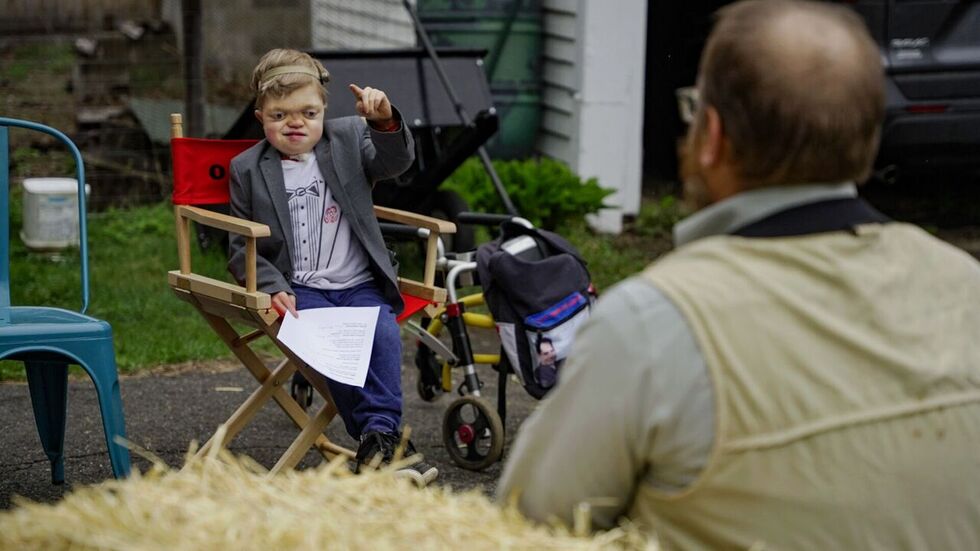
Apaixonado por séries e romances policiais, Oliver encontra em personagens como Columbo, Jessica Fletcher e, especialmente, em Monk algumas de suas maiores referências. Quando o filme começa, ele está concentrado na realização de seu próprio mistério investigativo, intitulado The Game Is Murder. Com a participação de moradores da cidade interpretando suspeitos e testemunhas, além do apoio técnico da equipe de filmagem, Oliver assume o papel de detetive, roteirista e diretor de sua própria produção. O menino encarna o “diretor de cinema” com uma confiança surpreendente, os trechos exibidos do projeto são divertidos e revelam uma criatividade contagiante, nos fazendo querer acompanhar ainda mais essa história criada por ele.
Lowen e Cohrs obtêm acesso íntimo ao cotidiano da família, acompanhando não apenas Oliver, mas também seus pais, Casey e Chad, e sua irmã mais nova, Willa. É nesse espaço doméstico que Kids Like Me encontra sua maior força. Em vez de construir uma narrativa centrada exclusivamente na deficiência, o filme observa uma família real lidando com responsabilidades, cansaços, afetos e conflitos. Oliver é inteligente, articulado e surpreendentemente maduro para a idade, mas continua sendo uma criança. Ele provoca a irmã, faz birras, se irrita quando contrariado e demonstra inseguranças típicas de qualquer pré-adolescente.
Essa recusa em transformar seu protagonista em exemplo moral é uma das qualidades mais interessantes do documentário. Oliver surge como um personagem completo, com virtudes e defeitos, desejos e contradições. O filme entende que a verdadeira inclusão não está em apresentar pessoas com deficiência como figuras excepcionais, mas em reconhecê-las em toda sua complexidade humana.
Ao mesmo tempo, Kids Like Me não ignora os desafios concretos enfrentados pela família. Há momentos em que a preocupação dos pais se torna visível, especialmente quando pensam no futuro e na autonomia do filho. Casey e Chad se esforçam para oferecer a Oliver as ferramentas necessárias para desenvolver sua independência, sem deixar que as necessidades dele apaguem a presença de Willa dentro da dinâmica familiar. O documentário observa esse equilíbrio delicado, que passa também pelas dificuldades financeiras que os cuidados especiais exigem, mas com honestidade e sem recorrer a sentimentalismos fáceis.
O resultado é uma obra muito mais rica do que uma simples celebração da força comunitária ou da realização de um sonho infantil. Embora exista uma rede de apoio afetuosa ao redor de Oliver, Kids Like Me está mais interessado em investigar as complexidades da convivência, do cuidado e do crescimento. É um filme sobre deficiência, mas também sobre criatividade, família, infância e identidade.
Graças ao documentário, Oliver tem a chance de se aproximar de seu maior ídolo e recebe uma visita emocionada do ator Tony Shalhoub, astro de Monk: Um Detetive Diferente, que participa das filmagens de sua pequena obra de mistério. Ao final, fica a sensação de termos conhecido alguém extraordinário não por suas limitações ou conquistas, mas por sua singularidade. Oliver não é apresentado como herói nem como vítima. É apenas um garoto apaixonado por mistérios, tentando escrever sua própria história enquanto aprende a ocupar seu lugar no mundo. E talvez seja justamente isso que torna o documentário tão comovente.
Kids Like Me fez parte da seleção oficial do Festival de Tribeca 2026
- English Review:
Imagination as a Way of Existing
There is a recurring risk when documentary cinema approaches stories about disability: the tendency to transform its subjects into inspirational symbols, simplifying their lives into narratives of triumph designed to comfort audiences. Fortunately, Kids Like Me, directed by Cynthia Lowen and Jon Cohrs, avoids that trap. The documentary finds humanity precisely where idealization might have prevailed, crafting a sensitive, humorous, and complex portrait of Oliver, a 12-year-old boy whose imagination seems larger than any physical limitation.
Living in the small town of Montague, Massachusetts, Oliver was born with several congenital conditions that significantly affect his mobility. His skull is fused, his knees and elbows lack joints, and he has depended on a tracheostomy tube since the first weeks of his life. These challenges require constant attention from his family. Yet the documentary refuses to define its protagonist by these conditions. What first stands out about Oliver is his expansive personality, sharp sense of humor, and, above all, his obsession with mystery and crime stories.
A devoted fan of detective series and crime novels, Oliver finds inspiration in characters such as Columbo, Jessica Fletcher, and especially Adrian Monk. When the film begins, he is deeply engaged in creating his own murder mystery, titled The Game Is Murder. With local residents playing suspects and witnesses, and with technical support from the documentary crew, Oliver takes on the roles of detective, screenwriter, and director of his own production. He embraces the role of “filmmaker” with remarkable confidence, and the excerpts shown from the project are genuinely entertaining, revealing a contagious creativity that makes us eager to see more of the story he has imagined.
Lowen and Cohrs gain intimate access to the family’s daily life, following not only Oliver but also his parents, Casey and Chad, and his younger sister, Willa. It is within this domestic space that Kids Like Me finds its greatest strength. Rather than constructing a narrative focused exclusively on disability, the film observes a real family navigating responsibilities, exhaustion, affection, and conflict. Oliver is intelligent, articulate, and surprisingly mature for his age, but he remains a child. He teases his sister, throws tantrums, becomes frustrated when things do not go his way, and experiences the insecurities common to any preteen.
This refusal to transform its protagonist into a moral lesson is one of the documentary’s most compelling qualities. Oliver emerges as a fully realized individual, complete with strengths and flaws, desires and contradictions. The film understands that true inclusion does not come from presenting people with disabilities as exceptional figures, but from recognizing them in all their human complexity.
At the same time, Kids Like Me does not ignore the concrete challenges faced by the family. There are moments when the parents’ concerns become visible, particularly as they think about Oliver’s future and his ability to live independently. Casey and Chad work tirelessly to provide him with the tools necessary to develop autonomy, while ensuring that his needs do not overshadow Willa’s place within the family dynamic. The documentary observes this delicate balance, including the financial burdens associated with specialized care, with honesty and without resorting to easy sentimentality.
The result is a film far richer than a simple celebration of community support or the fulfillment of a childhood dream. While there is undoubtedly a loving support network surrounding Oliver, Kids Like Me is more interested in exploring the complexities of care, coexistence, and growing up. It is a film about disability, but also about creativity, family, childhood, and identity.
Thanks to the documentary, Oliver is given the opportunity to meet his greatest idol and receives an emotional visit from actor Tony Shalhoub, the star of Monk, who joins the filming of his small mystery project. By the end, we are left with the feeling that we have met someone extraordinary—not because of his limitations or achievements, but because of his individuality. Oliver is presented neither as a hero nor as a victim. He is simply a boy who loves mysteries, trying to write his own story while learning how to find his place in the world. And perhaps that is precisely what makes the documentary so moving.
Kids Like Me was part of the Official Selection of the Tribeca Festival 2026.