Sour Minnows | 2026
A realidade perde o sentido
Poucos cineastas contemporâneos redefiniram o surrealismo cinematográfico de maneira tão influente quanto David Lynch. Em obras como Twin Peaks (1990–2017), Cidade dos Sonhos (2001) e Império dos Sonhos (2006), o diretor norte-americano dissolveu as fronteiras entre sonho, memória e realidade, criando universos onde o cotidiano convive naturalmente com o inexplicável. Em seu cinema, o mistério raramente funciona como um quebra-cabeça a ser solucionado; antes, manifesta-se como uma experiência sensorial capaz de desestabilizar tanto os personagens quanto o espectador. Essa herança permanece viva em parte do cinema independente recente, em filmes como Under the Silver Lake (2018), de David Robert Mitchell, e I Saw the TV Glow (2024), de Jane Schoenbrun, que transformam paranoia, crise de identidade e cultura contemporânea em narrativas marcadas pela estranheza e pela sensação constante de deslocamento.
Sour Minnows, novo longa escrito e dirigido por Harrison Atkins, dialoga diretamente com essa tradição. Exibido em estreia mundial no Festival Internacional de Cinema Fantasia, o filme representa um novo passo na trajetória do cineasta, conhecido por trabalhos como Lace Crater (2015), em que o absurdo, o humor desconfortável e personagens emocionalmente desencontrados já ocupavam papel central. Aqui, Atkins radicaliza essas características ao construir um suspense psicológico que abandona qualquer compromisso com a lógica convencional.
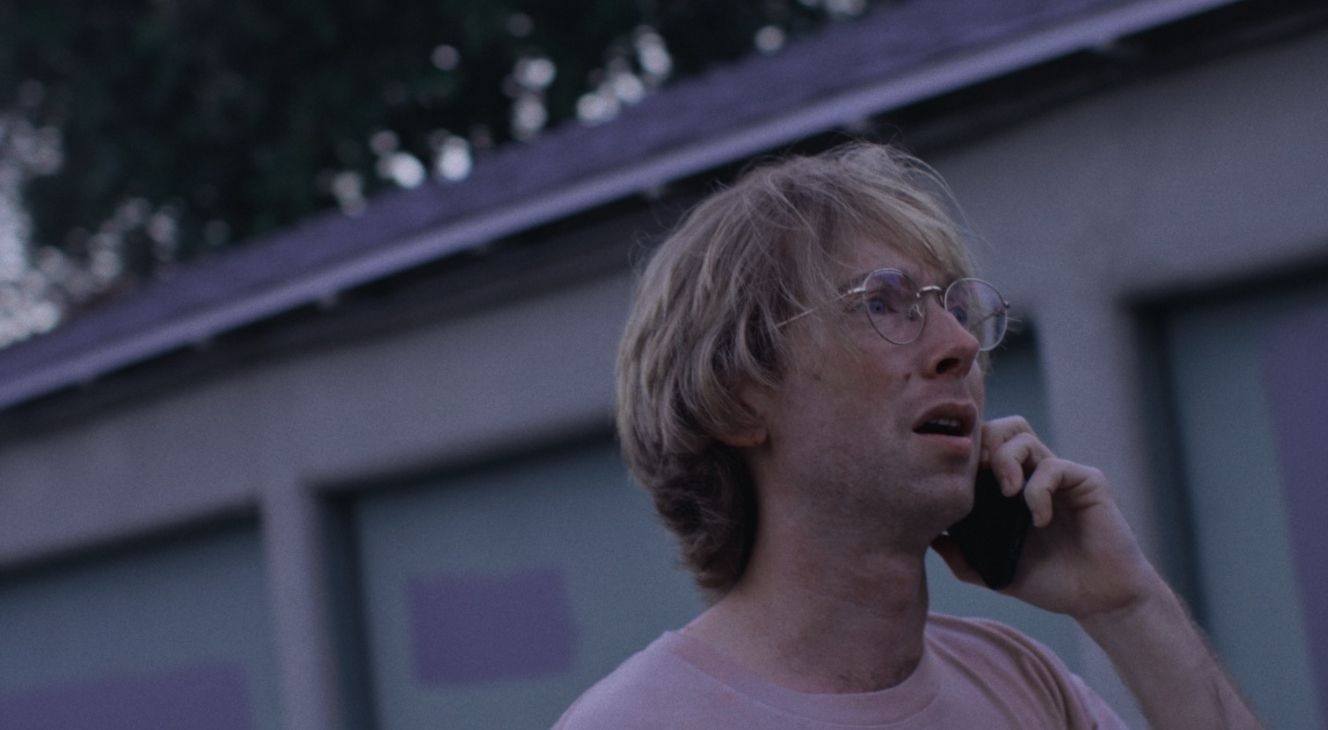
A narrativa acompanha Ricky (David Brown) e seu colega de apartamento, Tepper (Chase Williamson), cuja rotina muda radicalmente após presenciarem uma cena impossível de explicar: seis homens lambendo sensualmente o asfalto de uma rua vazia em Los Angeles. A partir desse momento, o tempo perde estabilidade, as lembranças deixam de ser confiáveis e as relações pessoais passam a adquirir significados inesperados.
Ricky mantém uma relação de contornos indefinidos com Aura (Suzanna Son), uma jovem cinéfila que compartilha de sua sensibilidade e de seu aparente deslocamento diante do mundo. A conexão entre os dois é estranha. Em determinado momento, Ricky simplesmente entra no carro e dirige sem destino até perceber que, de forma quase inconsciente, chegou à casa dela. Como se fosse guiado por um impulso que nem ele próprio compreende, o personagem vaga pelo filme em permanente suspensão existencial, incapaz de se ancorar na realidade. Essa sensação se intensifica quando ele e Tepper se sentam para assistir a um filme e acabam mergulhando em uma conversa sem pé nem cabeça, incapazes de afirmar se realmente o viram ou se a experiência pertence apenas à memória difusa de ambos. Atkins transforma acentua a incerteza, fazendo da confusão mental de Ricky um reflexo de uma existência que já não distingue lembrança, imaginação e presente.
No centro desse universo está “A Coisa Amarela”, uma entidade enigmática capaz de tomar posse de corpos humanos, apagando identidades e embaralhando qualquer noção objetiva da realidade. A criatura jamais recebe uma explicação definitiva, funcionando menos como ameaça concreta do que como manifestação do colapso perceptivo que domina os personagens. O resultado é um filme deliberadamente letárgico, profundamente sensorial e construído a partir de fragmentos narrativos que reproduzem o estado mental de seus protagonistas.
Embora a influência de Lynch seja evidente, Sour Minnows encontra personalidade própria ao combinar surrealismo, humor desconcertante e uma atmosfera de permanente instabilidade. Se compartilha com Under the Silver Lake o impulso de transformar um acontecimento aparentemente banal em uma espiral de obsessões e significados ocultos, aproxima-se de I Saw the TV Glow ao sugerir que a realidade pode se desfazer silenciosamente diante dos personagens, sem que eles consigam distinguir o que é memória, fantasia ou experiência concreta.
Mais do que propor um enigma a ser solucionado, Atkins está interessado em investigar como a percepção molda nossa relação com o mundo. Sour Minnows convida o espectador a experienciar o desconforto lisérgico de uma juventude apática e consumida pela modernidade elevada a níveis tóxicos, em um filme onde identidade, memória e realidade permanecem em constante mutação e angústia.
Essa crítica faz parte da cobertura do Festival Internacional de Cinema Fantasia 2026.
English review:
When Reality Loses Its Meaning
Few contemporary filmmakers have redefined cinematic surrealism as profoundly as David Lynch. In works such as Twin Peaks (1990–2017), Mulholland Drive (2001), and Inland Empire (2006), the American director dissolved the boundaries between dreams, memory, and reality, creating worlds where the ordinary coexists naturally with the inexplicable. In his cinema, mystery rarely functions as a puzzle to be solved; instead, it emerges as a sensory experience capable of unsettling both the characters and the audience. That legacy remains alive in recent independent cinema, in films such as Under the Silver Lake (2018) by David Robert Mitchell and I Saw the TV Glow (2024) by Jane Schoenbrun, which transform paranoia, identity crises, and contemporary culture into narratives defined by estrangement and a persistent sense of displacement.
Sour Minnows, the new feature written and directed by Harrison Atkins, draws directly from this tradition. Premiering at the Fantasia International Film Festival, the film marks another step in the filmmaker’s career, following works such as Lace Crater (2015), where absurdity, uncomfortable humor, and emotionally adrift characters already occupied center stage. Here, Atkins pushes those qualities even further, crafting a psychological thriller that abandons any commitment to conventional logic.
The story follows Ricky (David Brown) and his roommate, Tepper (Chase Williamson), whose lives are radically altered after they witness an impossible sight: six men sensually licking the asphalt of an empty street in Los Angeles. From that moment on, time loses its stability, memories become unreliable, and personal relationships begin to take on unexpected meanings.
Ricky shares an undefined relationship with Aura (Suzanna Son), a young cinephile who mirrors both his sensitivity and his apparent disconnection from the world around him. Their bond feels elusive and difficult to define. At one point, Ricky simply gets into his car and drives aimlessly, only to realize that, almost unconsciously, he has arrived at Aura’s house. As though guided by an impulse he cannot explain, he drifts through the film in a constant state of existential suspension, unable to anchor himself in reality. That sensation intensifies when he and Tepper sit down to watch a movie, only to find themselves trapped in a bewildering conversation, unable to determine whether they actually watched it or whether the experience exists solely as a blurred shared memory. Atkins heightens this uncertainty, making Ricky’s mental disorientation a reflection of an existence that can no longer distinguish between memory, imagination, and the present.
At the center of this fractured universe is “The Yellow Thing,” an enigmatic entity capable of inhabiting human bodies, erasing identities and dismantling any objective notion of reality. The creature is never fully explained, functioning less as a tangible threat than as a manifestation of the perceptual collapse consuming the characters. The result is a deliberately languid, deeply sensory film built from fragmented narrative pieces that mirror the protagonists’ fractured states of mind.
Although Lynch’s influence is unmistakable, Sour Minnows establishes a distinct personality by combining surrealism, unsettling humor, and an atmosphere of constant instability. If it shares Under the Silver Lake’s fascination with turning an apparently mundane event into a spiral of obsession and hidden meaning, it also recalls I Saw the TV Glow in suggesting that reality can quietly unravel before its characters, leaving them unable to distinguish memory from fantasy, or either from lived experience.
Rather than presenting a mystery to be solved, Harrison Atkins seems more interested in exploring how perception shapes our relationship with the world. Sour Minnows invites the audience to embrace the discomfort of uncertainty, in a film where identity, memory, and reality remain in a constant state of transformation and anxiety.
This review is part of our coverage of the Fantasia International Film Festival.